
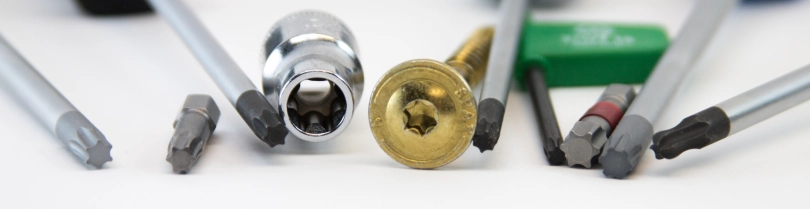
We have discussed previously on this blog about the highly specific “Pentalobe” screw head and the tools used in conjunction. The Pentalobe shape is a relatively new invention compared to one its cousins, the Hexalobular screw, which many people call a star or Torx. Torx is actually a trademark of Camcar Textron, so the use of its name is another example of genericized trademark, like we use the term Allen Wrench for Hex Keys.
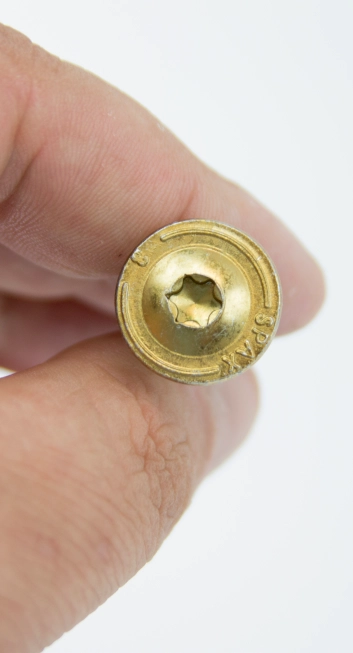
The original six pointed profile has similarities to a hex-end head but the sides are concave, providing six points opposed to sides. This creates essentially 12 points of contact opposed to the hex’s six, allowing for much more torque to be applied. There is a theory out there that Phillips screws were INTENTIONALLY designed to cam out, so the screw would not be over-tightened in the end. Torx is just the opposite, as its design prevents the tool from camming out, providing a better grip in the fastener.
Torx screws are used in several applications, from automobiles to computers. They also come in a number of varieties. They come in external versions (for use in a socket wrench or ratchet), security (with a pin in the center of the screw head to prevent tampering), and what is known as Torx Plus. When the patent to the original Torx design was about to expire in the early nineties, Textron improved on the design by squaring off the lobes slightly to minimize wear and maximize torque. A standard Torx driver will fit into a Torx Plus screw, but a Torx Plus will not work in a standard so be sure to know which one you will be working with.
Finally, a note on sizing and nomenclature: One of the beauties of Torx sizes is that they are universal, meaning there is not an SAE vs Metric version. They are all the same. For the standard Torx, sizes are distinguished using a T before a number. The number is a point-to-point dimension that runs from T1 all the way up to T100. Some of the most common sizes are T10, T15, and T25, but there are many specialized sizes including T47 and even T5.5. If you need the security version, an S is added to the end of the number. External Torx use an E before their size, but do not correspond to the internal sizes. For example, an E8 external Torx is equivalent to a T40 internal Torx. And then rounding it all out is Torx Plus, which uses IP (internal plus) and EP (external plus) for designating size. Kinda complicated, huh? OH! Did I mention you can get them with a Ball-end as well?
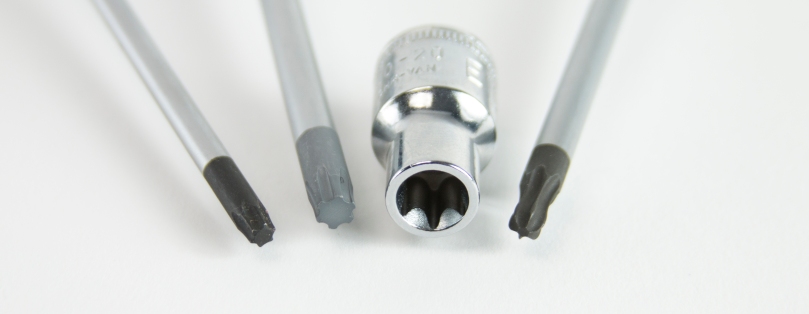
There is one thing that is not complicated, though, and that is the best Torx tools can be found in one place, KC Tool.

 German Tools | Knipex Tools | Wera Tools | Wiha Tools | Gedore Tools | Felo Tools | KC Tool
Very cool
Really good info. Thanks for sharing
This is my comment.
a_and_e_designs
Love torx fasteners !
Lol wish you wrote this 2 years ago before I was baptized by fire with BMWS fetish for these things 😂
Torx is one of my favorite screw heads. Always liked how it felt the screw driver locked in. Others seem mushy. Nice to know wht all the termonogly means.
Someone said free torx and I came runnin’🏃 Good info too!
Didn’t know about torx plus. Interesting, but if that becomes popular you have sort of lost the no metric/standard benefit
Torx is quickly replacing hex in the bike industry.
Well written article!
Torx are great plus they look cooler too in many applications
Great post as always. Wera drivers are my favorite. Thanks
Honestly, as a mechanic I’m not that pleased with torx bolts because they collect crud, begin to rust & then they’re difficult to remove. As a knife maker though, they work well & make for a clean design.
Doing DYi work on my friends/family bmw’s i feel you, having to start getting many inverted torx sockets in various sizes to not strip anything. I noticed most of the bmw’s are all aluminum and need replacing after use. Have not had any crud issues over a 6 point.
I agree, not as a mechanic but as a biomed tech. Actually the worst I’ve encountered are in Sirona dental milling systems. The material that the teeth are milled from harden inside the points of the torx head (often times very small ones) and are damn near impossible to clean out to ensure full bit insertion.
In other applications though I’ve not had any issues.
Tore and Robertson is the way to go!!
Wooo just got the laser tip philips head set would love this!
Love torxs, used all over in Germany, wish we would trade in robbies for torx here in Canada
I use to torx on the trucks I work on these look great
Using Torx fasteners on bicycle disc brakes makes sense but is infuriating when every other fastener is hex. It makes sense for the high torque application but it’s just another tool to have around!
Good info to learn the why and how of things.
Would love to add these to the collection!
Torx plus is the bomb. Something like 40% more torque can be applied to the heads of bolts. We used to use them at an old gig of mine to retain parts in a carbon fibre compression mold during its curing cycle under 30 tons of pressure! Also, baby needs a new set of Torx drivers 😉
T25s are fast becoming a standard in the bicycle industy
Would be perfect for working on my Saab!
Thanks this post. It’s very informative.
I find torx to be better then hex less rounding of the screw or bit.
I really like Torx over Phillips or Slotted, especially Slotted…I really hate Slotted. No worries about camming out or sliding out of the slot. I’ve started purposely looking for either Torx or Robertson head screws when buying.
Torx screws are great and wera makes great tools
I’ve always been a fan or torx, especially for use in wood screws.
Not having the right tool, torx me off.
I wish torx and Robertson screw were the norm here in the US instead of the Phillips and slotted screws.
Love the torx head. Such a better fastener!
Thanks for sharing!
Good read
I have always wanted a good set if torx drivers and these look like the ones to have for sure.
All I need is a torx set to go along with my brand new 12 wera screwdriver set!!!!
Great info, thanks!
love the wera set and the spax torx screws are awesome
Those are a great set of torx drivers!!!
I really enjoy torx when used in areas with good access. However, when they are on boilers in very tight spaces, I would prefer a hex bolt head that can fit a combo wrench or adjustable wrench inside. Not the fault of the bits! More so the choice of the manufacturer. But that’s my view on them.
As an HVAC Technician I use and have used many different tool brands, but I never have used these. I would love to give them a test run. Texas summers are brutal, and it shows a true test of a tool to survive in such conditions. Truly only the strong survive.
Awesome tools
Perfect for working on those German cars!!
Awesome as usual
Great article
Can always use a set of quality torx.
IG = @58chev_delray
Hexalobular ball ends are the best!
Great article!
Love that these are becoming more and more common, best fastener around.
Another great set from Wera. Great handles, just like my Wera nut drivers I currently have.
I still don’t understand why everything’s not slot headed. I’ve never once had a slot screw strip out on me and they work great with impact drivers. My 2 sense.